
Roof Ventilation in Plano, TX: Why It Matters, How It Works & Signs You Need an Upgrade
Proper roof ventilation is one of the most overlooked yet critical parts of your home’s roofing system. In hot, humid climates like Plano, TX, ventilation does much more than just let air escape. It protects your roof, enhances energy efficiency, prevents moisture damage, and helps your roofing materials last longer.
At Pure Ciel Roofing, we specialize in creating balanced roof ventilation solutions tailored for Plano homes and businesses, ensuring year-round comfort and long-term protection.
In this guide you’ll learn:
What roof ventilation is and how it works
Why ventilation is essential in Plano’s climate
Common types of roof ventilation systems
Signs your roof needs improved ventilation
How professional ventilation services protect your home
What Is Roof Ventilation?
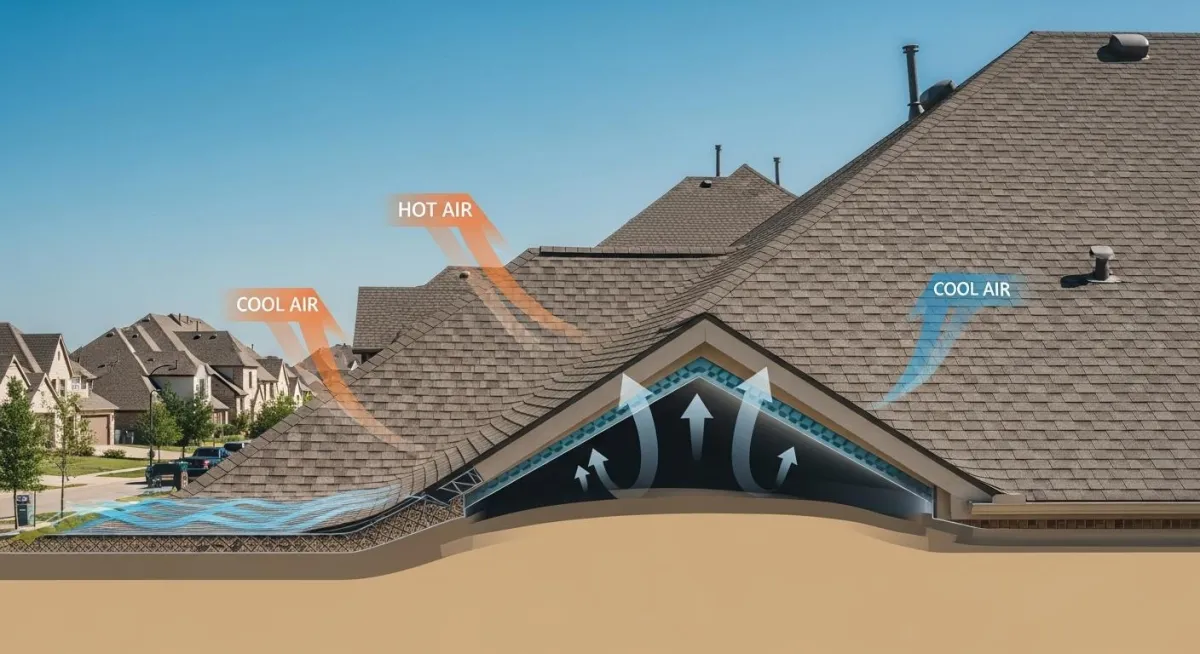
Roof ventilation is the system that allows fresh air to flow into your attic and hot, moist air to escape. A balanced ventilation system improves airflow throughout the attic space, which helps regulate temperature and moisture levels. Proper ventilation works with your roof structure — not separately from it — to prevent damage and improve performance.
Without adequate ventilation, heat and moisture become trapped in the attic, which can lead to a host of problems like premature shingle failure, mold growth, and higher energy bills.
Why Roof Ventilation Is Especially Important in Plano, TX
Plano’s hot summers and high humidity place extra stress on roofing systems. Without good ventilation:
Attic temperatures can exceed normal limits, increasing cooling costs.
Moisture can build up and damage insulation and wood framing.
Roofing materials may degrade faster, shortening the life of your roof.
Because of this, roof ventilation isn’t an extra — it’s an essential part of a weather-resistant roofing system, especially in North Texas’ climate.
Common Types of Roof Ventilation Systems
There is no “one-size-fits-all” when it comes to roof ventilation. Different systems work in different ways, and a balanced approach is usually best.
Ridge Vents
These vents run along the roof’s peak, allowing warm, moist air to escape naturally. When paired with intake vents (like soffit vents), they create continuous airflow without moving parts.
Soffit Vents
Installed at the eaves, soffit vents let cool outside air enter the attic. This intake is essential for balanced airflow.
Powered Vents
Powered attic fans or power vents use motors to actively pull hot air out of attic spaces. These are often used in large homes or commercial buildings.
Static Vents (Box & Off-Ridge Vents)
Static vents are simple passive vents that allow warm air to escape. They are often used where ridge vents aren’t feasible but may require more units to be effective.
Wind Turbine Vents
These vents spin with wind to draw air up and out of the attic. They don’t use electricity but rely on wind conditions.
Benefits of Proper Roof Ventilation
Improved Energy Efficiency
Balanced ventilation keeps attic temperatures lower, reducing the need for aggressive air conditioning and potentially lowering your energy bills.
Moisture Control
By removing excess moisture, ventilation helps prevent mold and mildew growth, wood rot, and damage to insulation.
Extended Roof Lifespan
Heat and moisture are silent attackers on roofing materials. Proper ventilation helps protect shingles and decking from premature aging.
Enhanced Indoor Comfort
A well-ventilated attic supports a more consistent indoor temperature, reducing strain on HVAC systems and improving overall home comfort.
Signs Your Roof Ventilation Isn’t Working
Even quality roofing systems can develop ventilation problems over time. Look for these signs:
Unusually high attic or indoor temperatures
Increased energy bills without changes in usage
Visible moisture, mold, or mildew in attic spaces
Curling or warped shingles
Ice dam formation in rare colder months
Persistent humidity or condensation in attic areas
Poor attic insulation performance
If you notice any of these issues, it could indicate insufficient or unbalanced ventilation. A professional inspection can diagnose the root cause and recommend corrective measures.
How Pure Ciel Roofing Helps with Ventilation in Plano, TX
At Pure Ciel Roofing, we understand the unique roofing needs of homes and businesses in Plano and the broader Dallas Metroplex. Our roof ventilation services include:
Comprehensive attic and roof assessment
Balanced ventilation design tailored to your structure
Professional installation of soffit, ridge, power, or turbine vents
Integration with insulation upgrades for maximum efficiency
Long-term performance checks and maintenance
If you’re looking to improve your home’s airflow, energy efficiency, and roof longevity in Plano, our team has the expertise to deliver solutions that last.
👉 Explore our full range of professional roofing and maintenance services here:
https://purecieltx.com/services
FAQs — Roof Ventilation in Plano, TX
1. What is the best type of roof ventilation for Plano homes?
The best system depends on your roof design, attic space, and climate exposure a balanced combination like ridge + soffit vents often delivers excellent airflow.
2. How much does roof ventilation installation cost in Plano?
Costs vary based on roof size, type of vents, and system complexity. We provide free ventilation assessments and transparent pricing.
3. Does roof ventilation really impact energy bills?
Yes proper ventilation can lower cooling loads on HVAC systems, reducing energy usage, especially in Plano’s hot summers.
4. Can I add roof ventilation without replacing my roof?
Often, yes. Many homes can have improved ventilation installed independently of a roof replacement.
5. How often should roof ventilation be inspected?
During standard annual roof inspections air flow components should be checked yearly to ensure peak performance.
6. Does roof ventilation help during winter?
Balanced ventilation helps control moisture and reduces the risk of ice dams in colder months even in mild Texas winters.
7. Is more ventilation always better?
Not always too much exhaust without intake can create pressure imbalances. A professional design ensures the right balance.
8. Are powered vents louder than passive vents?
Modern powered vents are designed to operate quietly, but passive systems like ridge and soffit vents have no moving parts and are silent.
9. Does roof ventilation help protect insulation?
Yes proper airflow prevents moisture buildup that can saturate insulation and reduce its effectiveness.
10. What happens if roof ventilation is ignored?
Ignoring ventilation can lead to heat buildup, moisture damage, shortened roof lifespan, increased energy bills, and structural issues over time.
Final Thoughts
Roof ventilation isn’t just a “nice-to-have” it’s an essential part of roof health and home comfort in Plano, TX. Whether you’re building a new home or upgrading an existing roof, a balanced ventilation system will pay dividends in efficiency, durability, and comfort.
If you’d like a professional ventilation assessment, contact Pure Ciel Roofing today your trusted roofing partner in the Dallas Metroplex.
